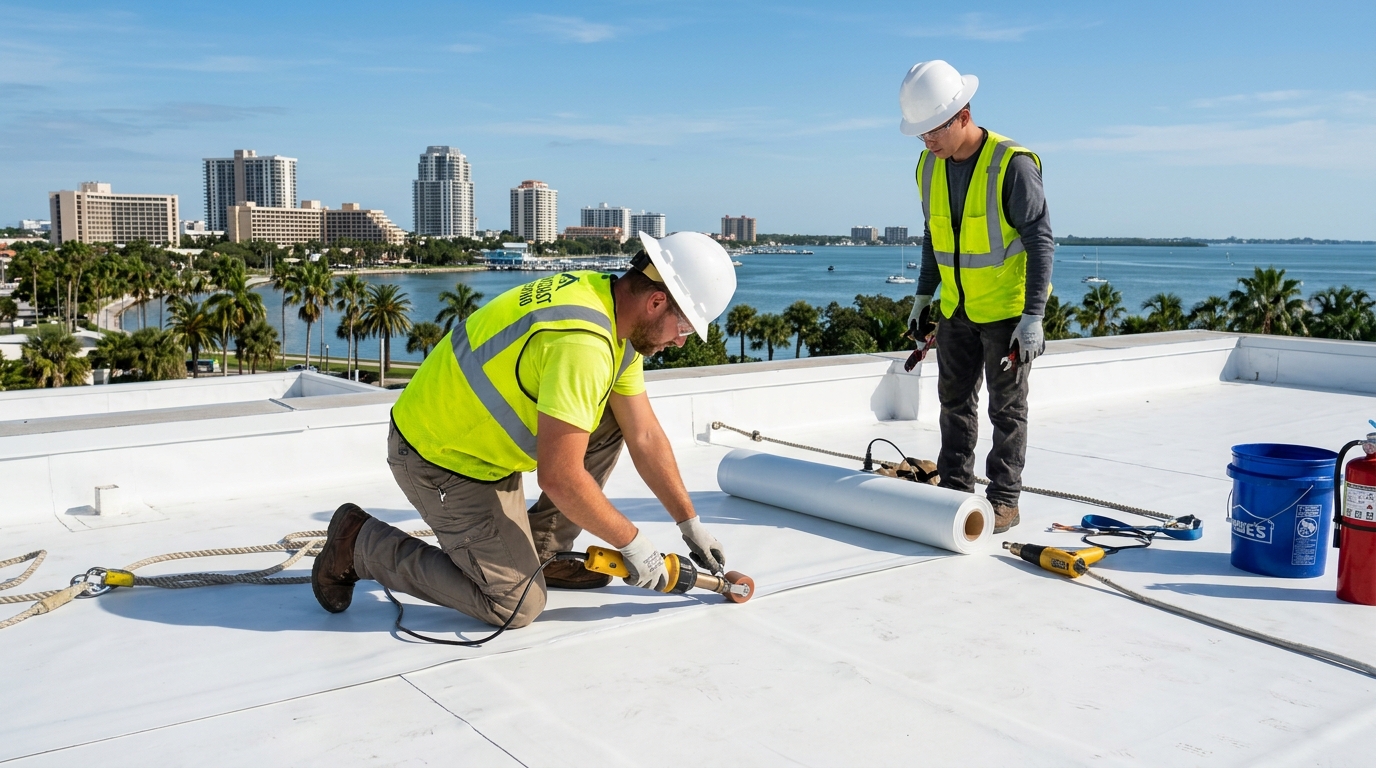
Emergency Roof Leak Repair & Active Water Containment in Boise, ID
When water penetrates roofing materials during a fierce Treasure Valley storm or winter temperature inversion, damage escalates within minutes. Ceiling drywall sags, blown-in cellulose attic insulation compresses and loses thermal resistance, and moisture creates hazardous electrical short circuits. Roof Expert USA dispatches independent, licensed Idaho roofing contractors equipped with non-destructive thermal imaging diagnostics to locate hidden water paths and implement immediate physical containment across Boise, Meridian, and Eagle.
1. Regional Microclimate Dynamics & Severe Storm Exposure in Boise
The Treasure Valley's high-desert microclimate creates extreme conditions for residential and commercial roofs. During Boise's winter inversion season, dense, sub-freezing fog blankets the lower valley while solar exposure and escaping interior building heat melt snow on upper roof slopes. This meltwater runs down to sub-freezing eaves, where gutters and unheated overhangs refreeze the runoff into dense ice dams. Trapped meltwater backs up beneath architectural shingles, infiltrating roof decking through nail holes and structural seams. In summer, severe convective cloudbursts accompanied by 50+ MPH gusts drive torrential rain horizontally against high-altitude roof valleys and sidewall flashings. Dispatched contractors analyze these regional storm forces to locate and stop water ingress at its true structural source.
Locating the exact point of exterior roof failure requires sophisticated non-destructive diagnostics because water routinely travels along roof rafters, horizontal collar ties, and electrical conduits before dripping through interior ceilings. Dispatched technicians deploy calibrated FLIR high-resolution thermal imaging cameras to identify subtle temperature differentials caused by hidden moisture behind drywall and inside attic insulation. Pinless electronic moisture meters establish exact boundary lines of saturated structural decking. Furthermore, technicians perform attic-side inspections to verify whether leaks stem from ice dam backups, cracked pipe flashing collars, or deteriorated valley sheet metal.
Emergency containment follows a rigorous, step-by-step restoration methodology. First, technicians secure the exterior perimeter using ASTM D1970 self-adhering polymer-modified bitumen membranes that create a self-healing seal around existing fasteners. In active ice dam scenarios, technicians utilize commercial low-pressure, high-temperature steam machines to carve clean drainage channels through the ice barrier without damaging fragile asphalt shingles. Lifted shingle tabs are hand-bonded using cold-weather elastomeric asphalt mastics conforming to ASTM D4586 Type I standards. If structural sheathing has sustained rot or deflection, technicians install temporary reinforced underlayment barriers secured with timber battens until permanent tear-off restoration can occur under dry weather conditions.
4. Idaho Contractor Registration (DOPL) & State Building Code Compliance
All dispatched roofing professionals must maintain active registration with the Idaho Division of Occupational and Professional Licenses (DOPL) under the Idaho Contractor Registration Act (Idaho Code Title 54, Chapter 52). Work conforms strictly to the 2021/2024 International Residential Code (IRC) Section R905 and local municipal amendments adopted by the City of Boise and Ada County Development Services. This includes ensuring ice barrier underlayment extends a minimum of 24 inches inside the interior heated wall line and verifying that all repairs preserve manufacturer warranty compliance.
Property owners can prevent catastrophic roof failures through proactive winter storm preparedness. Ensure attic insulation achieves recommended R-38 to R-49 ratings to prevent warm air from escaping and triggering eave ice damming. Keep gutters and downspout leaders clear of pine needles and autumn leaves prior to the first freeze in November. Following severe wind events or hail storms exceeding 50 MPH in the Boise Foothills, schedule a professional roof inspection to detect lifted shingle tabs and microscopic membrane fractures before seasonal rains cause severe interior drywall collapse.
Treasure Valley On-Site Triage & Dispatch Safety Protocols
When an active roofing failure threatens your property, following standardized safety procedures prevents personal injury and minimizes secondary structural damage while dispatched crews are en route:
Strict Fall Hazard Prevention: Never attempt to access a roof during rain, snow, freezing inversion fog, or high wind events. Steep pitched surfaces across Ada County residential areas become slick as ice, creating severe trauma hazards. Professional crews utilize certified OSHA-compliant fall arrest systems, ridge anchors, and specialized traction footwear.
Electrical System Isolation: Immediately turn off circuit breakers governing any rooms where water is dripping from ceilings, light fixtures, or wall outlets to avert electrical shorts and structure fires.
Controlled Interior Drainage: Relieve trapped water weight behind bulging ceiling drywall by piercing the center of the water pocket with a small screwdriver and catching the flow in large buckets.
Independent Referral Model Assurance: All dispatched contractors are independent, licensed, and registered third-party roofing professionals under Idaho DOPL regulations. Estimates, insurance scopes, and physical repairs are contracted directly with the assigned roofing contractor.
Frequently Asked Questions • Active Roof Leak Containment
How quickly can a roofing contractor be dispatched to my property?
Our telephone dispatch desk operates 24/7 to triage active emergencies. Dispatched contractors are routed based on current field location, storm severity, and weather safety across Boise, Meridian, Eagle, and the Treasure Valley. Contacting dispatch by phone eliminates delays associated with unmonitored web forms.
Will an emergency repair or tarping be covered by my homeowner insurance?
Most standard homeowner insurance policies require property owners to take reasonable and immediate steps to mitigate active water damage following a covered storm event. Emergency tarping, moisture containment, and temporary board-up costs are typically reimbursable under insurance loss mitigation provisions. Dispatched technicians provide itemized receipts and photo documentation to support your claim.
What credentials do dispatched roofing contractors hold in Idaho?
Dispatched independent roofing service providers are registered with the Idaho Division of Occupational and Professional Licenses (DOPL) under the Idaho Contractor Registration Act. Contractors carry commercial general liability insurance and workers' compensation coverage, adhering strictly to Idaho building codes and manufacturer installation specifications.
Direct Phone-to-Crew Dispatch
Request Emergency Triage for Active Roof Leak Containment
Our dispatch desk is active 24/7 across Boise, Meridian, Eagle, and the Treasure Valley. Strictly zero web forms.