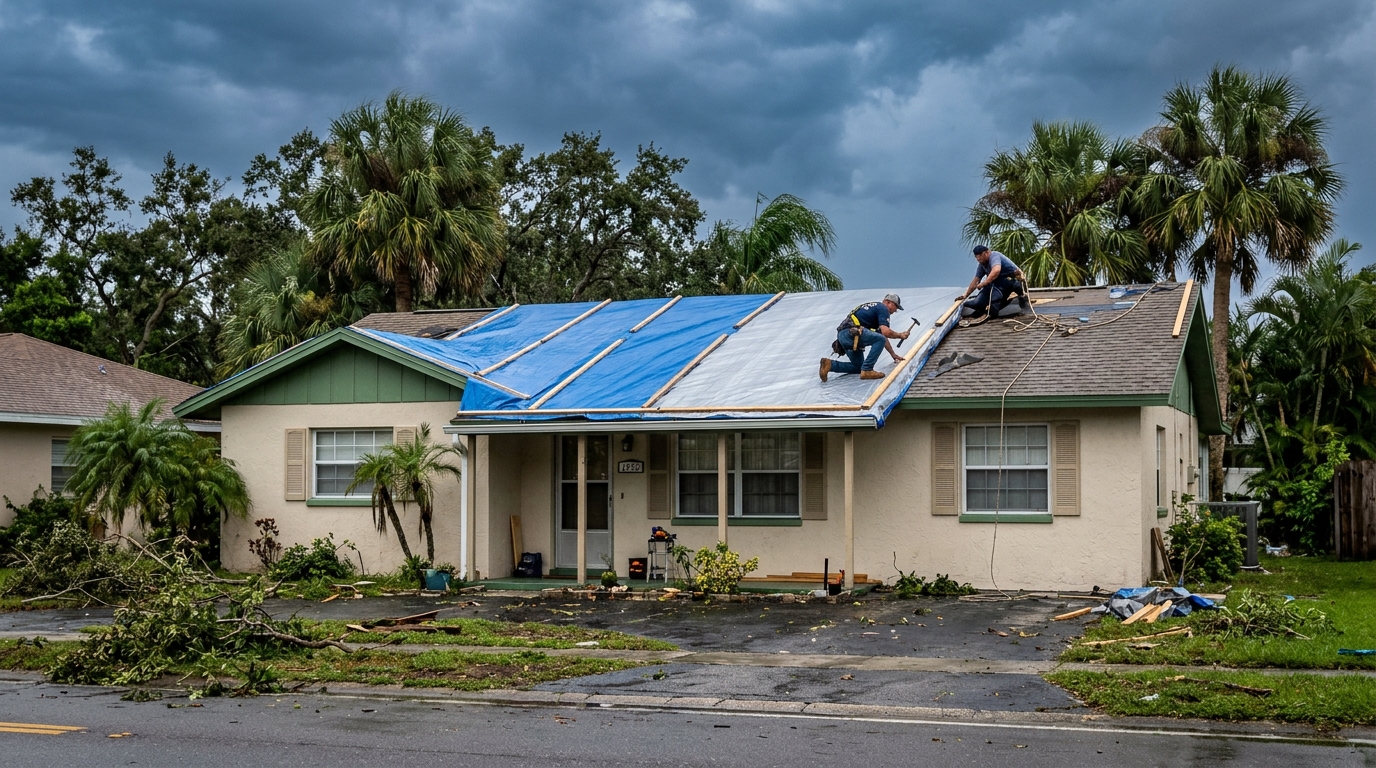
Emergency Roof Tarping & Post-Storm Stabilization in Nampa, ID
As the industrial and agricultural heart of Canyon County, Nampa combines historic downtown brick structures, expansive industrial flat-roof facilities, and large residential neighborhoods. Unobstructed westerly winds sweeping across the Snake River plain subject Nampa roofs to ferocious gust fronts, ripping asphalt shingles and tearing low-slope commercial membranes. Roof Expert USA dispatches independent licensed Idaho contractors to execute heavy-duty emergency tarping and structural weatherproofing across Nampa.
Protocol 3: Canyon County Residential and Commercial Flat-Roof Rapid Emergency Stabilization.
Protocol 4: OSHA-Compliant Fall Arrest Rigging and Full Adjuster Photo Packages.
1. Regional Microclimate Dynamics & Severe Storm Exposure in Nampa Roof Tarping
Nampa's elevation of 2,516 feet places it on the open valley floor, where thermal microbursts and sustained winds exceeding 60 MPH occur during seasonal transitions. In summer, severe convective storms push straight-line winds that rip aged shingles and tear metal fascia. In winter, freezing rain and heavy snow accumulation create ponding on low-slope commercial roofs. Once the protective roofing surface is compromised, moisture rapidly saturates roof decking, drywall ceilings, and insulation, escalating repair costs exponentially.
Emergency assessment begins with structural safety verification. Technicians inspect roof framing for storm impact displacement, broken trusses, and rotted plywood sheathing. Technicians utilize aerial drones and high-definition thermal imaging to map water saturation across the roof surface. Crews identify where wind uplift has broken shingle adhesive seals on surrounding slopes, determining the exact footprint required for durable mechanical tarping.
Emergency tarping methodology in Nampa follows heavy-duty structural specifications. Dispatched crews reject lightweight utility tarps that shred in 30 MPH winds. Instead, technicians install commercial-grade 10-mil cross-laminated polyethylene tarps. The tarp edges are wrapped around 2x4 timber battens and secured directly to the roof rafters using 3-inch structural timber framing screws. All perimeter edges are sealed with heavy-duty flashing tape to eliminate wind-flutter and prevent water from driving beneath the tarp.
4. Idaho Contractor Registration (DOPL) & Municipal Building Code Compliance
All emergency tarping procedures adhere strictly to OSHA fall safety standards (29 CFR 1926.501) and comply with City of Nampa building requirements and Idaho DOPL regulations. Dispatched contractors are fully registered, insured, and equipped to secure residential homes, agricultural facilities, and commercial buildings safely.
Following emergency tarp installation, property owners must coordinate prompt permanent repairs with their insurer and licensed roofing contractor. An engineered tarp provides reliable temporary protection for 30 to 90 days. Periodically inspect the tarp from the ground following severe weather to verify that timber anchor battens remain securely fastened.
Emergency Triage & Homeowner Safety Standards in Nampa Roof Tarping
When storms threaten your home in Nampa Roof Tarping, immediate interior stabilization prevents escalating structural loss:
Never climb onto an active leaking roof: Wet shingles, high wind gusts, and frost create deadly slip hazards. Dispatched professional crews are equipped with OSHA-compliant roof anchors and safety harnesses.
Relieve trapped water pressure: If ceiling drywall is bulging or holding water, pierce the center with a screwdriver to drain the reservoir into buckets, preventing a massive ceiling drywall collapse.
Isolate electrical fixtures: Turn off breaker switches governing ceiling lights or fans located in wet areas to eliminate fire and shock hazards.
Direct Voice Dispatch Advantage: Calling (888) 208-4155 connects you immediately to our live dispatch desk, routing your situation directly to on-call registered Idaho contractors.
Frequently Asked Questions • Nampa Roof Tarping
How does dispatch routing work for Nampa Roof Tarping?
Our telephone dispatch coordinators triage emergency calls 24/7, routing your property details immediately to qualified independent Idaho roofing contractors currently active in your local sector. All estimates, insurance assessments, and physical repairs are performed directly by the dispatched licensed contractor.
Why are web forms avoided for emergency roof leak reporting?
Active leaks escalate damage by the minute, causing electrical shorts, drywall saturation, and mold development. Online forms often sit unread in email queues for 12 to 24 hours. Voice telephone dispatch provides immediate two-way safety guidance and instantaneous contractor dispatch.
Are emergency roof repair costs reimbursable under insurance?
Most homeowner policies include 'reasonable mitigation' clauses that cover emergency board-up, tarping, and active leak containment following storm events. Dispatched contractors provide itemized receipts and high-resolution photo documentation formatted for insurance adjusters.
Frequently Asked Questions • Treasure Valley Dispatch Network
What communities in the Treasure Valley are covered by emergency dispatch?
Our dispatch network covers Boise, Meridian, Eagle, Nampa, Caldwell, Kuna, and Garden City across Ada and Canyon counties. On-call independent contractors are dispatched based on real-time field proximity and severe storm severity.
How does dispatch ensure contractors are properly licensed in Idaho?
All participating independent roofing service providers must maintain active registration with the Idaho Division of Occupational and Professional Licenses (DOPL) under the Idaho Contractor Registration Act (Idaho Code Title 54, Chapter 52). Contractors carry commercial general liability insurance and workers' compensation coverage.
What information should I have ready when calling the dispatch desk?
When calling (888) 208-4155, be prepared to provide your street address, approximate building age, roof material type (shingle, tile, metal, or low-slope flat roof), and the exact location of active interior water leaks to expedite appropriate contractor equipment mobilization.
Direct Phone-to-Crew Dispatch
Call Dispatch for Nampa Roof Tarping
Immediate voice triage for active leaks, high-wind shingle displacements, and emergency tarping across Ada and Canyon counties.