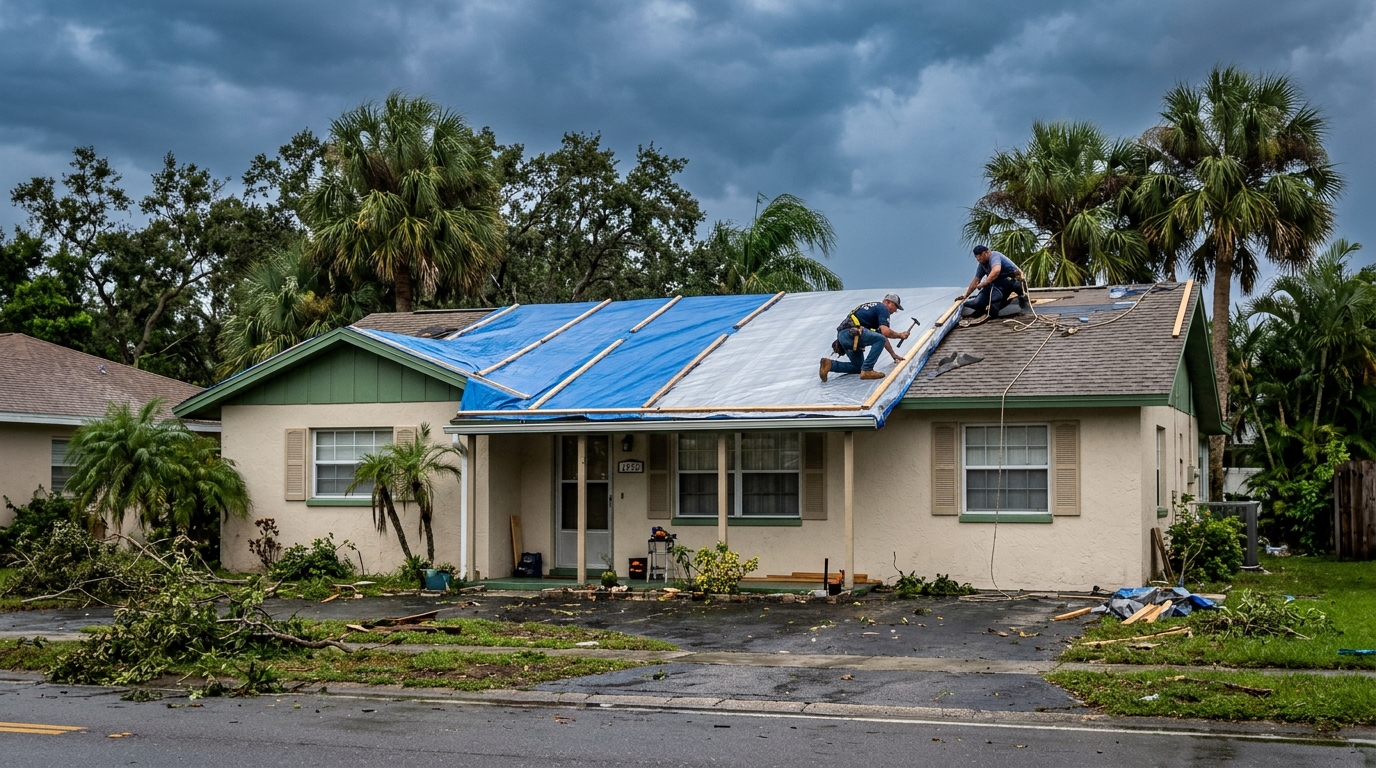
10-Mil Heavy Poly Tarps • Mechanical 2x4 Timber Battens • High-Wind Tie-Down

Emergency Roof Tarping & High-Wind Structural Stabilization in Boise, ID

Severe thunderstorm microbursts and high-velocity mountain downslope winds across the Boise Ridge frequently shear away large sections of asphalt shingles, blow off ridge caps, and crush roof structures under falling tree branches. Leaving exposed plywood or OSB roof decking unprotected during active storms leads to catastrophic attic flooding and structural framing rot. Roof Expert USA coordinates immediate emergency roof tarping deployment across Boise, Meridian, Eagle, Nampa, and Caldwell, installing heavy-duty mechanical weather barriers that resist 60+ MPH gusts.

DISPATCH HOTLINE: (888) 208-4155 CALL: (888) 208-4155

Key Technical Engineering Protocols • Boise Service Desk

  • Protocol 1: Heavy-Duty 10-Mil Cross-Laminated Woven Poly Tarps Engineered for Severe Wind Uplift.
  • Protocol 2: 2x4 Mechanical Timber Batten Fastening with 3-Inch Structural Framing Screws.
  • Protocol 3: Treasure Valley Wind Shingle Tab Bonding Protocol on adjacent vulnerable courses.
  • Protocol 4: OSHA-Compliant Fall Protection Rigging and Comprehensive Adjuster Photo Packages.

1. Regional Microclimate Dynamics & Severe Storm Exposure in Boise

The Treasure Valley experiences intense wind patterns resulting from severe atmospheric pressure gradients between the high desert of Eastern Oregon and the Rocky Mountains. Wind gusts accelerating out of the Boise Foothills and across the open plains of South Meridian and Kuna regularly exceed 60 to 70 MPH. These powerful aerodynamic uplift forces get beneath loosened shingle edges, peeling entire courses off the roof deck. Once the structural underlayment is torn away, torrential rain saturates the plywood sheathing, causing rapid delamination and creating immediate entry points into living spaces below.

2. Non-Destructive Moisture Diagnostics & FLIR Thermal Tracing

Proper emergency tarping requires comprehensive damage assessment before installation. Technicians evaluate the structural integrity of the roof rafters and trusses to ensure safe weight-bearing capacity following tree impacts or severe snowloads. Crews map the exact boundary of exposed decking using digital aerial cameras and measure roof pitch to calculate appropriate wind-load resistance. Crucially, technicians inspect surrounding intact shingles to identify broken thermal adhesive sealant strips that require hand-bonding to prevent adjacent sections from lifting during subsequent wind events.

3. Step-by-Step Engineering Methodology & Substrate Containment

Our dispatched contractors enforce commercial-grade mechanical batten installation protocols. Rather than using flimsy blue polyethylene tarps weighted down with loose bricks or sandbags, crews install professional 10-mil woven, UV-resistant cross-laminated poly tarps. The tarp is rolled around 2x4 dimensional lumber battens at both ridge and eave terminations, effectively locking the material under tension. Technicians secure these battens using 3-inch structural timber screws driven directly into the underlying structural rafters, avoiding surface nail penetrations that cause future leaks. All seams are taped with commercial elastomeric flashing tape to eliminate wind-flutter and water entry.

4. Idaho Contractor Registration (DOPL) & State Building Code Compliance

All emergency tarping procedures follow strict OSHA fall protection standards (29 CFR 1926.501) and comply with Idaho DOPL safety mandates. Dispatched crews utilize temporary roof anchors, certified full-body harnesses, and shock-absorbing lanyards to execute hazardous stabilization safely. Furthermore, detailed pre-tarping and post-tarping macro photography is recorded to provide homeowners with an undeniable chain of custody and forensic proof for insurance adjusters, preventing insurance companies from claiming pre-existing neglect.

5. Preventative Property Maintenance & Winter Storm Preparedness

Following emergency tarp installation, property owners must coordinate with their insurance company and roofing contractor for permanent deck and shingle reconstruction. An emergency tarp is an engineered temporary weather barrier designed to protect your home for 30 to 90 days while permanent architectural materials and insurance claims are finalized. Property owners should periodically inspect the tarp from ground level following subsequent high-wind storms to verify that battens remain securely anchored.

Treasure Valley On-Site Triage & Dispatch Safety Protocols

When an active roofing failure threatens your property, following standardized safety procedures prevents personal injury and minimizes secondary structural damage while dispatched crews are en route:

  • Strict Fall Hazard Prevention: Never attempt to access a roof during rain, snow, freezing inversion fog, or high wind events. Steep pitched surfaces across Ada County residential areas become slick as ice, creating severe trauma hazards. Professional crews utilize certified OSHA-compliant fall arrest systems, ridge anchors, and specialized traction footwear.
  • Electrical System Isolation: Immediately turn off circuit breakers governing any rooms where water is dripping from ceilings, light fixtures, or wall outlets to avert electrical shorts and structure fires.
  • Controlled Interior Drainage: Relieve trapped water weight behind bulging ceiling drywall by piercing the center of the water pocket with a small screwdriver and catching the flow in large buckets.
  • Independent Referral Model Assurance: All dispatched contractors are independent, licensed, and registered third-party roofing professionals under Idaho DOPL regulations. Estimates, insurance scopes, and physical repairs are contracted directly with the assigned roofing contractor.

Frequently Asked Questions • Post-Storm Roof Tarping

How quickly can a roofing contractor be dispatched to my property?

Our telephone dispatch desk operates 24/7 to triage active emergencies. Dispatched contractors are routed based on current field location, storm severity, and weather safety across Boise, Meridian, Eagle, and the Treasure Valley. Contacting dispatch by phone eliminates delays associated with unmonitored web forms.

Will an emergency repair or tarping be covered by my homeowner insurance?

Most standard homeowner insurance policies require property owners to take reasonable and immediate steps to mitigate active water damage following a covered storm event. Emergency tarping, moisture containment, and temporary board-up costs are typically reimbursable under insurance loss mitigation provisions. Dispatched technicians provide itemized receipts and photo documentation to support your claim.

What credentials do dispatched roofing contractors hold in Idaho?

Dispatched independent roofing service providers are registered with the Idaho Division of Occupational and Professional Licenses (DOPL) under the Idaho Contractor Registration Act. Contractors carry commercial general liability insurance and workers' compensation coverage, adhering strictly to Idaho building codes and manufacturer installation specifications.

Direct Phone-to-Crew Dispatch

Request Emergency Triage for Post-Storm Roof Tarping

Our dispatch desk is active 24/7 across Boise, Meridian, Eagle, and the Treasure Valley. Strictly zero web forms.

CALL DISPATCH: (888) 208-4155