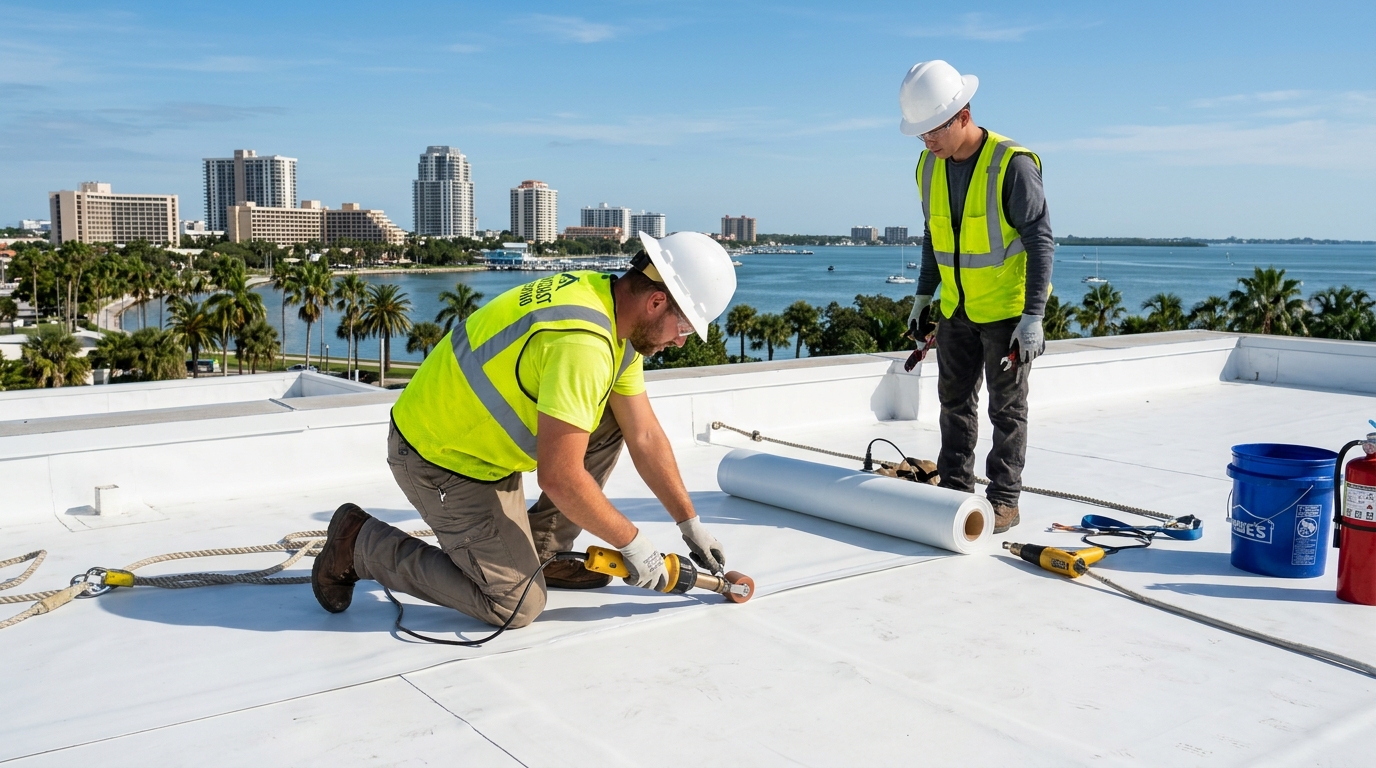
Commercial & Residential Flat Roof Ponding Repair in Boise, ID
Low-slope and flat roofing systems on Boise commercial buildings, multifamily complexes, modern residential additions, and mid-century carports face severe drainage challenges. Standing ponding water that remains for more than 48 hours accelerates membrane degradation, compromises seam adhesives, and exerts massive structural dead loads. Dispatched commercial roofing specialists deploy advanced hot-air seam welding, install internal drain diverters, and restore parapet wall coping caps across Boise, Nampa, Caldwell, and Garden City.
1. Regional Microclimate Dynamics & Severe Storm Exposure in Boise
Ponding water is defined by the National Roofing Contractors Association (NRCA) as water that remains on a low-slope roof 48 hours after precipitation. In the Treasure Valley, accumulated winter snowpacks combined with freezing rain create dense slush that blocks perimeter scuppers, roof drains, and downspout conductors. At 5.2 pounds per square foot per inch of water depth, ponding water strains roof joists and creates structural deflection. In summer, pooled water acts as a magnifying lens, intensifying solar ultraviolet rays and causing premature thermal degradation of single-ply TPO, PVC, and EPDM membranes.
Restoration methodology adheres strictly to commercial single-ply engineering standards. For TPO and PVC systems, technicians clean aged membrane surfaces using specialized primers and execute precision robotic or hand-held hot-air welds, creating molecularly fused seams that exceed original factory peel strength. In ponding depressions, crews install tapered polyisocyanurate insulation saddles coated with elastomeric silicone or polyurethane liquid-applied membrane systems to redirect water toward roof drains. Blocked scuppers and internal drains are mechanically cleared and fitted with automated self-regulating heat trace cables to prevent freezing.
4. Idaho Contractor Registration (DOPL) & State Building Code Compliance
All low-slope commercial repairs comply with City of Boise Commercial Building Codes, Idaho DOPL guidelines, and OSHA commercial safety standards. Dispatched technicians are factory-certified in single-ply thermoplastic and elastomeric systems, ensuring commercial property owners preserve their existing roof warranties.
Building managers and commercial property owners should inspect low-slope roofs at least twice annually—in late autumn before freezing storms begin, and in early spring after snowmelt. Ensure all drain strainer baskets are free of debris, check parapet coping joints for cracking, and verify that scupper outlets are unobstructed to prevent catastrophic roof ponding and collapse.
Treasure Valley On-Site Triage & Dispatch Safety Protocols
When an active roofing failure threatens your property, following standardized safety procedures prevents personal injury and minimizes secondary structural damage while dispatched crews are en route:
Strict Fall Hazard Prevention: Never attempt to access a roof during rain, snow, freezing inversion fog, or high wind events. Steep pitched surfaces across Ada County residential areas become slick as ice, creating severe trauma hazards. Professional crews utilize certified OSHA-compliant fall arrest systems, ridge anchors, and specialized traction footwear.
Electrical System Isolation: Immediately turn off circuit breakers governing any rooms where water is dripping from ceilings, light fixtures, or wall outlets to avert electrical shorts and structure fires.
Controlled Interior Drainage: Relieve trapped water weight behind bulging ceiling drywall by piercing the center of the water pocket with a small screwdriver and catching the flow in large buckets.
Independent Referral Model Assurance: All dispatched contractors are independent, licensed, and registered third-party roofing professionals under Idaho DOPL regulations. Estimates, insurance scopes, and physical repairs are contracted directly with the assigned roofing contractor.
How quickly can a roofing contractor be dispatched to my property?
Our telephone dispatch desk operates 24/7 to triage active emergencies. Dispatched contractors are routed based on current field location, storm severity, and weather safety across Boise, Meridian, Eagle, and the Treasure Valley. Contacting dispatch by phone eliminates delays associated with unmonitored web forms.
Will an emergency repair or tarping be covered by my homeowner insurance?
Most standard homeowner insurance policies require property owners to take reasonable and immediate steps to mitigate active water damage following a covered storm event. Emergency tarping, moisture containment, and temporary board-up costs are typically reimbursable under insurance loss mitigation provisions. Dispatched technicians provide itemized receipts and photo documentation to support your claim.
What credentials do dispatched roofing contractors hold in Idaho?
Dispatched independent roofing service providers are registered with the Idaho Division of Occupational and Professional Licenses (DOPL) under the Idaho Contractor Registration Act. Contractors carry commercial general liability insurance and workers' compensation coverage, adhering strictly to Idaho building codes and manufacturer installation specifications.
Direct Phone-to-Crew Dispatch
Request Emergency Triage for Flat Roof Ponding & Parapet Repair
Our dispatch desk is active 24/7 across Boise, Meridian, Eagle, and the Treasure Valley. Strictly zero web forms.